by Jennifer M.
Introduction
This Public Archaeology project focuses mostly on archaeology site preservation, site access, and education outreach. I used my BioArch field school to design an outreach event to teach the public about what exactly archaeology is and what exactly archaeologists do.
Background
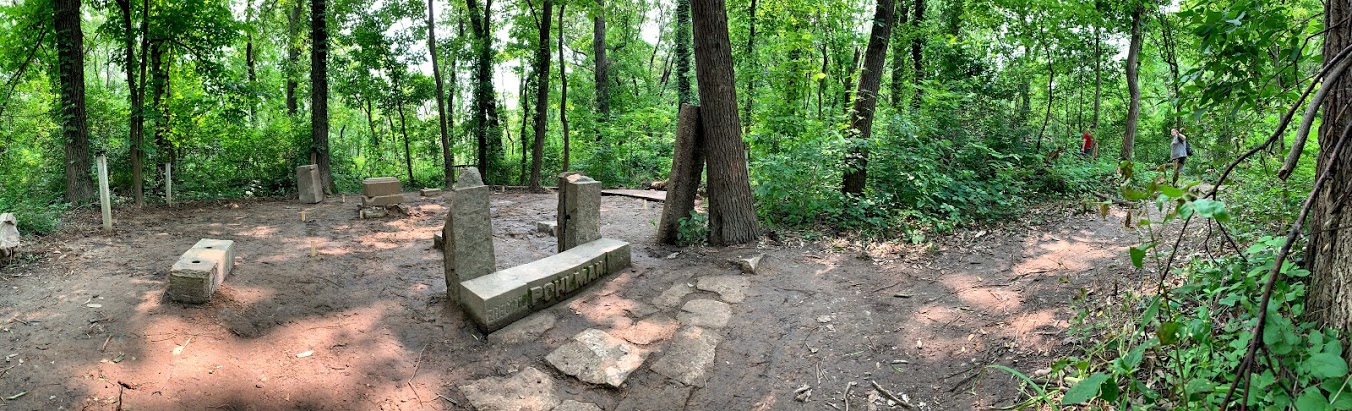
Not all archaeological sites are ancient ruins, buried cities, or earthen mounds. I spent six weeks learning forensics and biological anthropology and excavated in cemeteries and I thought that would be a great topic to present to the Edwardsville, Illinois residents in order to teach them the basics of archaeology.
Methods
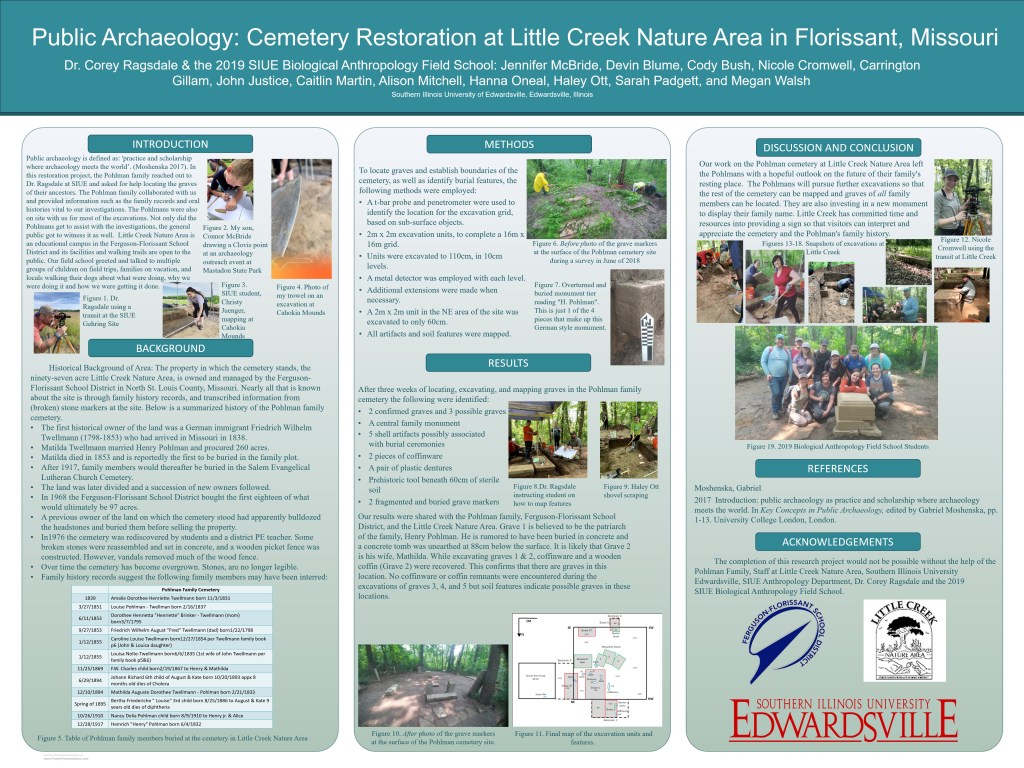
I summarized my bioarchaeology field school into a poster to present to the public in an attempt to generate interest about local archaeology and educate the public about:
- what archaeologists do
- why archaeology is important
- who does archaeology
- where archaeology can be done
- and how archaeology is done
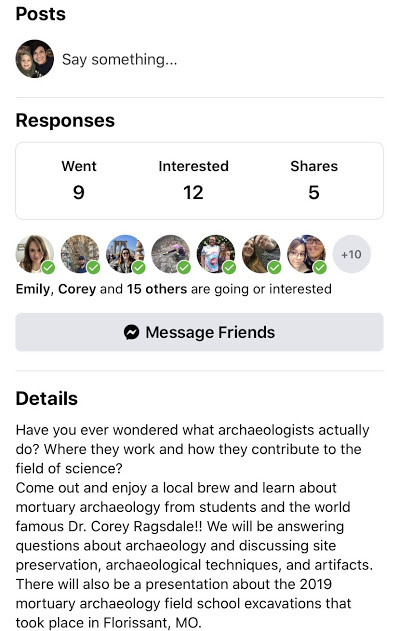
A Facebook event was created to generate more interest and advertisement of the event. I called it “Archaeology on Tap” (event name credit goes to Dr. K).
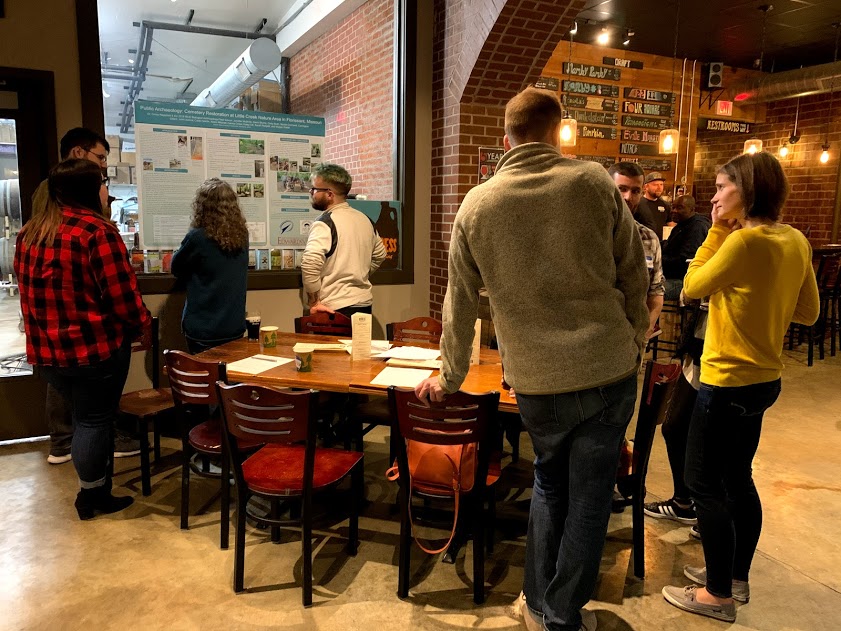
Along with the poster, I also invited students and my professor that participated in the field school with me. We met in the early evening on a weekday at a local brewery, Recess Brewing, set up the poster, put on name tags and grabbed a beer. Our goal was to welcome people to check out the poster and to have a casual conversation with them about archaeology. Interactions like this can help to combat misinterpretations about the science of archaeology and to generate more interest in the field.
I also took advantage of the opportunity to have the Edwardsville community take a survey that we designed in class. This survey was designed to give us an idea of what kind of community archaeology project the Edwardsville population would be interested in.
Results
The Facebook event did work in boosting the publicity of the event, however, less than ten of the people in attendance had heard about it through FB. The majority of attendees were students/faculty from SIUE or family members of sudents/faculty. Patrons of Recess were more interested in interacting with us in the first hour of our arrival (5pm-6pm) than they were later in the evening (6pm-9pm). Twelve of the community interest surveys were completed by and submitted for our research. I also was handed a hand-written list on a napkin of old cemeteries in the Edwardsville area that I may be interested in. That was a fine example of how community knowledge of the local history could contribute to a research project.
Conclusion
Overall, I think the entire project was a success because it taught me, the student, how to make archaeology interesting and marketable to the general public. This entire Public Archaeology course has taught me the multiple ways in which non-archaeologists interpret, interact, and contribute to the science of archaeology.
I am confident that if I designed this project again it would have better results because I would make changes like: advertise the outreach sooner and on multiple platforms, bring along artifacts for people to handle, view, and ask questions about, and I would have made the event on a weekend when more people have free time to attend.
 SIUE Public Archaeology